
Wisdom Teeth in Upstate South Carolina
Wisdom teeth are the last set of adult molars to develop, and they can look different from one patient to another. Some come in normally, while others may not have enough room to emerge fully or may become impacted.
At Upstate Oral & Maxillofacial Surgery & Dental Implant Center, our oral surgeons provide wisdom teeth evaluations for teens, young adults, and adults throughout Upstate South Carolina. An early evaluation with an oral and maxillofacial surgeon can help identify concerns with wisdom tooth development and positioning before they begin affecting nearby teeth, gums, or other structures. When a problem is identified early, our team can determine whether continued monitoring is appropriate or whether treatment should be considered before the condition becomes more complex.
What Are Wisdom Teeth?
Wisdom teeth, also called third molars, are located at the very back of the mouth behind the second molars. They are the last adult teeth to develop and typically emerge during the late teenage years or early adulthood.
Some wisdom teeth have enough space to come into a healthy position. When there is not enough room for a wisdom tooth to fully emerge, it may remain partially or completely beneath the gums or jawbone. This is known as an impacted wisdom tooth.
When Do Wisdom Teeth Come In?
Wisdom teeth commonly emerge between the late teenage years and early twenties, although their development and timing vary from person to person. They can often be identified on dental X-rays before they begin to come through the gums.
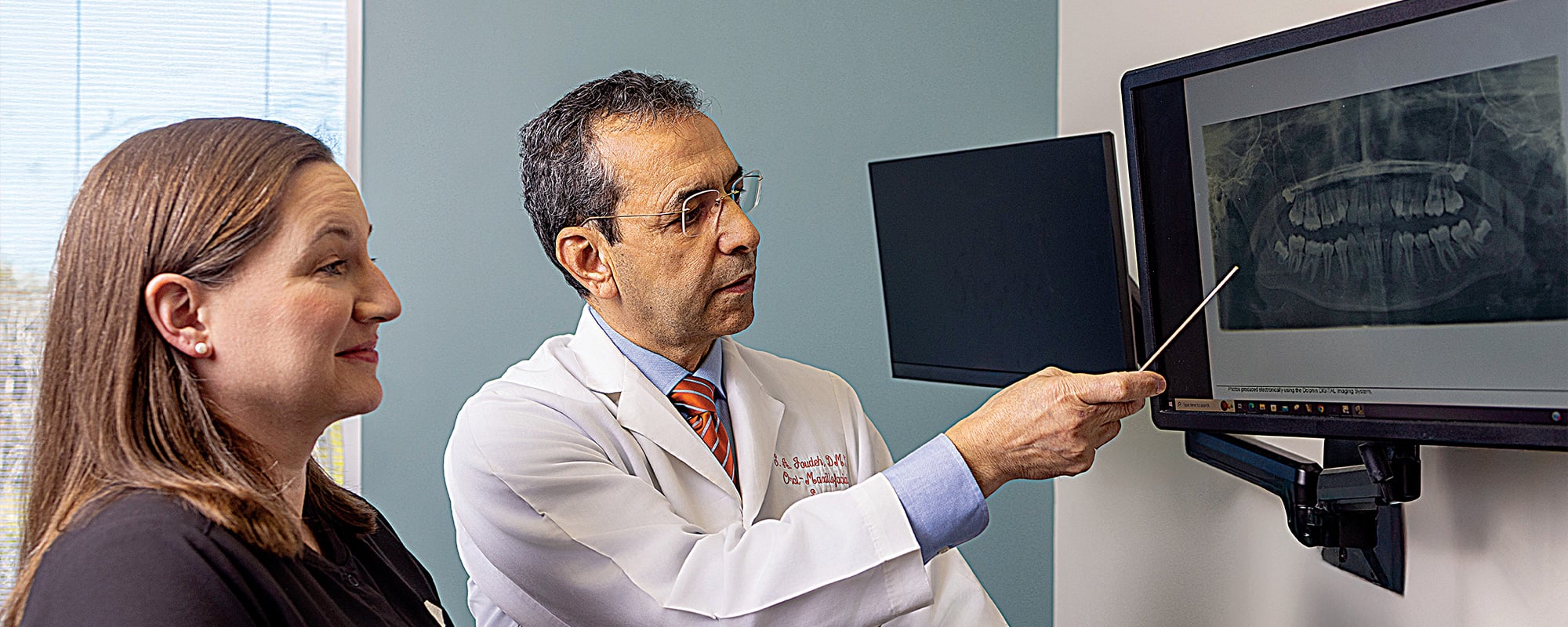
Evaluating wisdom teeth as they develop can help an oral surgeon understand their position, whether there appears to be enough room for them to emerge normally, and whether they should continue to be monitored. An oral examination and X-rays can be used to evaluate the position of the wisdom teeth and determine whether treatment is appropriate.
When Can Wisdom Teeth Become a Problem?
Not every wisdom tooth needs to be removed. Wisdom teeth that come in completely, remain healthy, and can be kept clean may be monitored over time.
Problems can develop, however, when wisdom teeth do not have enough room to emerge normally or when their position makes the area difficult to clean and maintain. Potential concerns can include:
- Impaction, when a wisdom tooth remains partially or completely beneath the gums or jawbone
- Pain, swelling, or recurring infection around the developing tooth
- Difficulty cleaning partially erupted wisdom teeth
- Tooth decay or gum problems around the wisdom tooth
- Effects on a neighboring second molar or surrounding tissues
- Other problems associated with the position or development of the tooth
An oral examination and imaging can help determine whether a wisdom tooth can continue to be monitored or whether removal may be appropriate.
Why Can Wisdom Teeth Cause Problems?
Wisdom teeth can cause problems when there is not enough room for them to emerge fully or when they develop in an unfavorable position. In these situations, the teeth may remain trapped beneath the gums or jawbone, grow at an angle, or affect the surrounding teeth and tissues.
Our oral surgeons evaluate both the position of the wisdom teeth and the health of the surrounding area when determining whether continued monitoring or treatment is appropriate.
Impaction
A wisdom tooth is impacted when it remains partially or completely beneath the gums or jawbone instead of fully erupting into the mouth.
The degree and position of impaction can vary from patient to patient. Our oral surgeons use an examination and imaging to assess tooth position and determine whether continued monitoring or treatment is appropriate.
Misalignment
Wisdom teeth may also develop at an angle rather than growing into a healthy position. A misaligned wisdom tooth may be directed toward a neighboring molar or positioned in a way that makes the area difficult to maintain.
When a wisdom tooth’s position raises concerns about the surrounding teeth or long-term oral health, wisdom teeth removal may be recommended. Our oral surgeons consider the position and development of each tooth, the patient’s oral health, and the appropriate timing of treatment before making a recommendation.
When Should Wisdom Teeth Be Evaluated?
Wisdom teeth are typically first evaluated during the mid-teen years by a dentist, orthodontist, or oral and maxillofacial surgeon. An examination and X-rays allow the surgeon to evaluate the position of the wisdom teeth and determine whether there are present or potential problems.
At Upstate Oral & Maxillofacial Surgery & Dental Implant Center, Dr. Samer A. Joudeh, Dr. S. Anthony Bowie, Dr. Sarah E. Proulx, and Dr. Craig E. Holliday evaluate developing wisdom teeth for patients in Easley, Seneca, and surrounding Upstate South Carolina communities.
Depending on how the teeth are developing, continued monitoring may be appropriate, or removal may be recommended if there is not enough room for the teeth to erupt normally or if other concerns are present.
Why See an Oral & Maxillofacial Surgeon for Wisdom Teeth?
Oral and maxillofacial surgeons receive specialized surgical training in treating conditions involving the teeth, jaws, and surrounding facial structures, including impacted wisdom teeth.
At Upstate Oral & Maxillofacial Surgery, wisdom teeth care is provided by expert oral and maxillofacial surgeons. They evaluate each patient’s wisdom teeth individually and develop a treatment plan based on their position, development, oral health, and treatment needs.
Upstate also offers anesthesia and sedation options for oral surgery, including local anesthesia, nitrous oxide, IV sedation, and office-based general anesthesia, depending on the procedure and the individual patient’s needs.
After Wisdom Teeth Removal
Some swelling, soreness, and tenderness are expected after wisdom teeth are removed as the surgical areas begin to heal. The recovery experience can vary depending on the number and position of the teeth removed, and the procedure’s complexity.
Upstate’s guide to recovery after wisdom teeth removal provides additional information about what patients can expect following surgery. Patients should also follow their post-operative instructions after wisdom tooth removal for guidance on bleeding, swelling, diet, oral hygiene, activity, medications, and other aspects of recovery.
Schedule a Wisdom Teeth Consultation in Upstate South Carolina
If you or your child has developed wisdom teeth or questions about whether treatment may be needed, an evaluation can help determine the appropriate next step.
Upstate Oral & Maxillofacial Surgery provides wisdom teeth care from offices in Easley and Seneca, serving patients and families from Pickens, Piedmont, Clemson, Greenville, and surrounding Upstate South Carolina communities.
Wisdom Teeth FAQs
No. The number of wisdom teeth that develop varies from person to person, and some people do not develop one or more third molars. Dental X-rays can help determine whether wisdom teeth are present and how they are developing.
Wisdom teeth typically develop during the teenage years, with development often completed between the mid-teen years and early twenties. Because their position and available space can vary, an evaluation and imaging can help determine whether they are developing normally or may benefit from wisdom teeth removal.
Not every patient will need their wisdom teeth removed. Your oral surgeon can evaluate their position, available space, and effect on the surrounding teeth to determine whether monitoring or wisdom teeth removal is appropriate. Removal may be recommended when wisdom teeth are impacted or when their position creates problems with cleaning or the health of nearby teeth.
Wisdom teeth can be evaluated as part of orthodontic planning or during orthodontic treatment. The appropriate timing depends on how the teeth are developing and the patient’s individual treatment plan, so the oral surgeon and orthodontist can determine whether monitoring or treatment is appropriate.
Wisdom teeth are third molars and are part of the adult dentition. Today, they are best considered like other teeth: if they develop in a healthy, functional position, they may be monitored, while impacted or unhealthy wisdom teeth may require treatment.