
Dental Implants in Easley & Seneca, SC

Missing teeth can make it harder to chew, speak, and smile with confidence. At Upstate Oral & Maxillofacial Surgery & Dental Implant Center, our oral surgery team provides dental implant placement for patients in Easley, Seneca, Greenville, and surrounding Upstate South Carolina communities.
Dental implants replace missing tooth roots and create a stable foundation for a crown, bridge, or denture. Schedule a consultation at our Easley or Seneca office to learn more about your dental implant options.
What are Dental Implants?
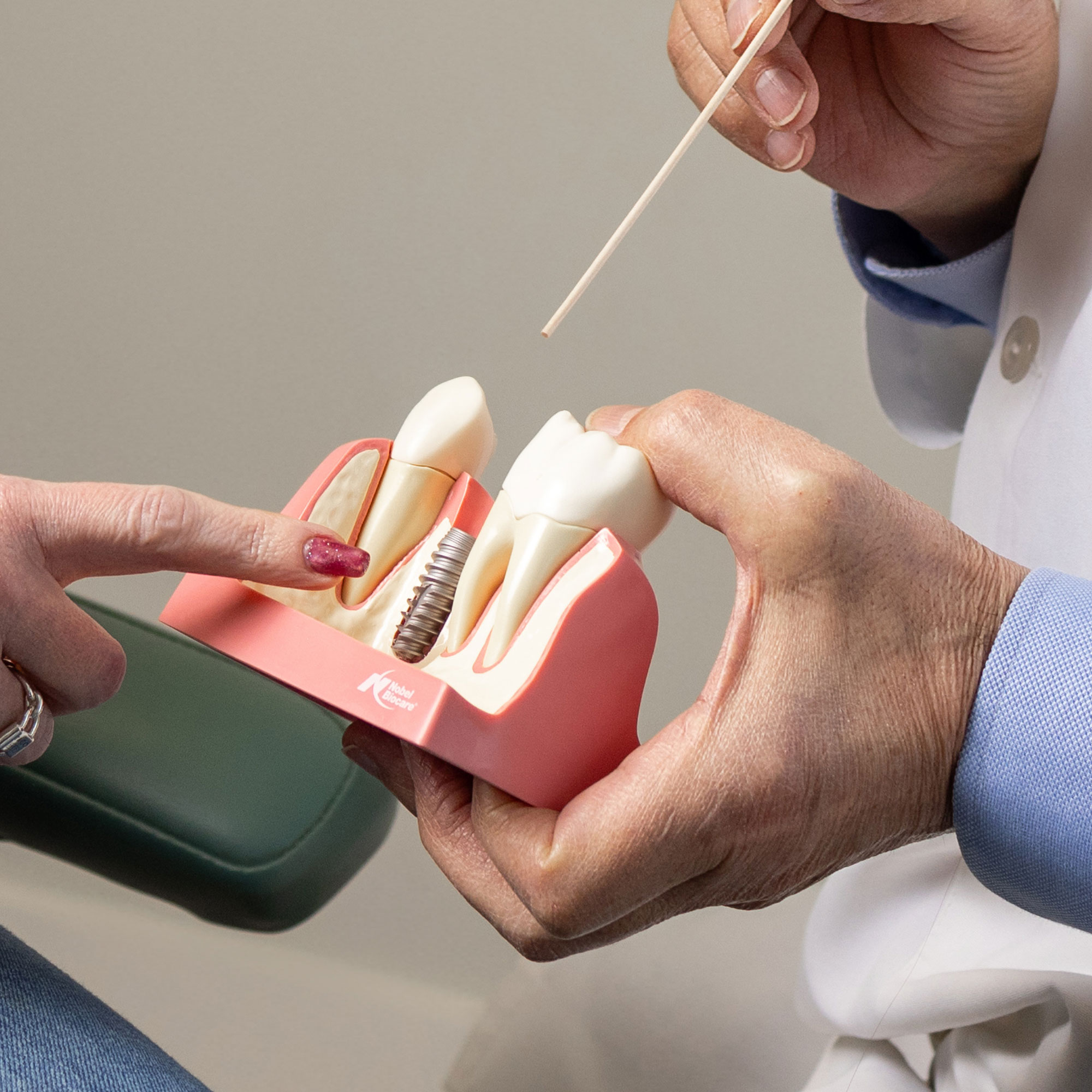
A natural tooth has two main parts: a root beneath the gums and a crown, which is the visible part used to chew. Dental implants are designed to replace the missing tooth root with a small titanium post that is surgically placed into the jawbone.
Time is allowed for the bone to heal and grow around the implant. As the bone bonds with the titanium, it creates a strong foundation for replacement teeth. A support post, called an abutment, is then placed on the implant, and a new replacement tooth, such as a crown, is placed on top.
In some cases, a temporary replacement tooth may be attached soon after implant placement, depending on the patient’s treatment plan. If all of your teeth are missing, your oral surgeon can discuss options designed to support a full arch of replacement teeth.
Are You a Candidate for Dental Implants?
You may be a candidate for dental implants if you are missing teeth, have teeth that cannot be predictably saved, or want a more stable alternative to removable dentures.
Several factors help determine whether dental implants are right for you, including the health of your gums, the amount of jawbone available to support the implant, your medical history, and your ability to heal after surgery. Patients who have experienced bone loss, long-term tooth loss, infection, or previous extractions may still be candidates, but they may need additional planning or bone grafting before implant placement.
During your consultation, our oral surgery team will review your oral health, evaluate your jawbone, and discuss the treatment options that best fit your goals.
Why Choose an Oral Surgeon for Dental Implants?
Dental implant placement is a surgical procedure, which is why many patients choose an oral and maxillofacial surgeon for this part of the treatment. Oral surgeons have advanced training in surgical planning, jawbone health, tooth extractions, bone grafting, anesthesia, and complex implant cases.
At Upstate Oral & Maxillofacial Surgery & Dental Implant Center, dental implant placement is a team effort between your oral surgeon and your restorative dentist. Dr. Joudeh, Dr. Bowie, Dr. Proulx, or Dr. Holliday performs the implant surgery, initial tooth extractions, and any necessary bone grafting. Your restorative dentist then designs and places the final restoration, whether that is a crown, bridge, or implant-supported denture.
This coordinated approach helps ensure your implant is placed with the final restoration in mind, so your replacement tooth or teeth can look, feel, and function as naturally as possible.
Dental Implant Treatments
Dental implants can be used in different ways depending on how many teeth are missing, the health of your jawbone, and the type of restoration needed. During your consultation, your oral surgeon will evaluate your needs and help determine which implant treatment option may be appropriate for your smile.
Single Tooth Implants
For patients missing one tooth, a dental implant can replace the missing tooth root and support a custom crown. This option can restore the space without relying on the neighboring teeth for support.
Multiple Dental Implants
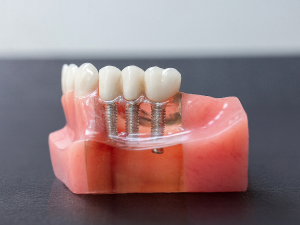
When several teeth are missing, dental implants may be used to support individual crowns or an implant-supported bridge. This can provide a stable alternative to removable partial dentures in many cases.
Full-Arch Tooth Replacement
Patients missing all upper or lower teeth may have options for replacing a full arch of teeth with implant-supported restorations. These solutions are designed to improve stability, chewing function, and confidence compared with traditional removable dentures.
Implant-Supported Dentures
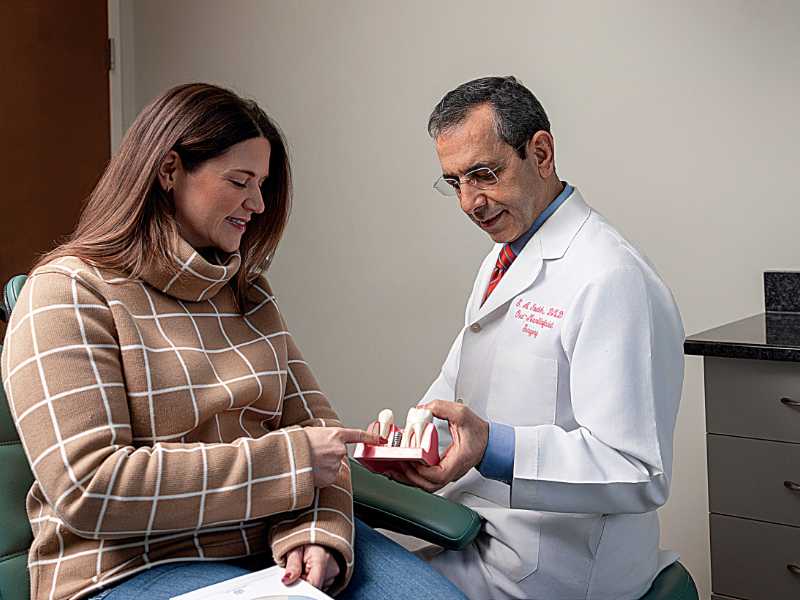
Implant-supported dentures use dental implants to help secure a denture in place. This can be an option for patients who struggle with loose, uncomfortable, or unstable dentures.
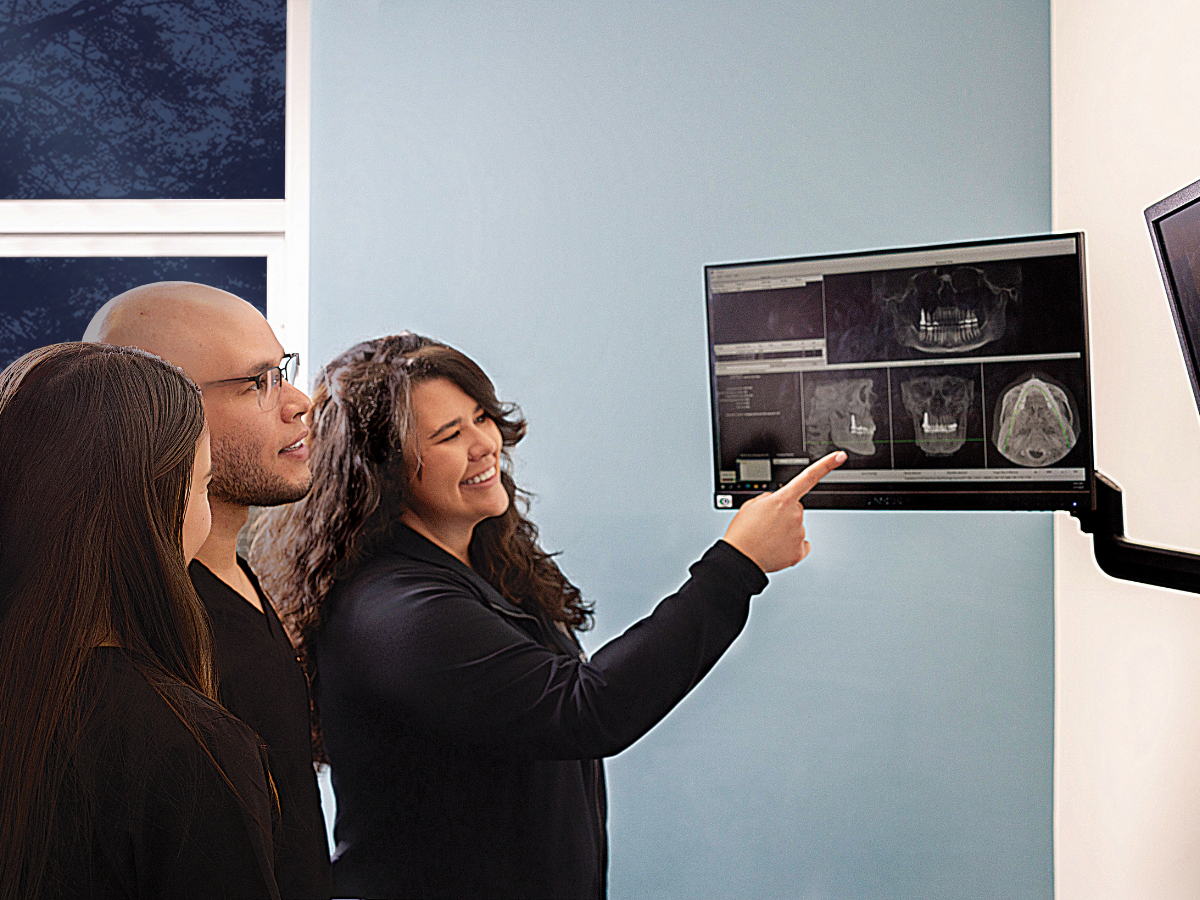
Same-Day or Immediate Implant Options
In select cases, patients may qualify for same-day implant options that allow a temporary replacement tooth or prosthesis to be attached soon after implant placement. Your oral surgeon can determine whether this type of approach is appropriate based on your oral health, jawbone support, and overall treatment plan.
Zygomatic Implants for Severe Bone Loss
For patients with significant bone loss in the upper jaw, zygomatic implants may be an advanced option. These implants are designed for complex cases in which traditional implants may not have the necessary bone support.

Dental Implant FAQs
Dental implants may be a good option if you are missing one tooth, several teeth, or a full arch of teeth and want a stable, long-term replacement solution. They are designed to replace missing tooth roots and support a crown, bridge, or denture, depending on your needs.
Dental implant placement is a surgical procedure, so many patients choose an oral and maxillofacial surgeon for this part of the treatment. An oral surgeon can place the implant, perform extractions if needed, address bone grafting when necessary, and coordinate with your restorative dentist for the final restoration.
Some patients with bone loss can still be candidates for dental implants, but they may need bone grafting or a more advanced treatment plan first. During your consultation, your oral surgeon will evaluate your jawbone and determine whether additional support is needed before implant placement.
Yes, dental implants can be utilized to support replacement teeth for patients missing all upper or lower teeth. Depending on your needs, options may include implant-supported dentures, full-arch restorations, or other advanced implant solutions.
The cost of dental implants varies based on the number of implants needed, whether extractions or bone grafting are required, the type of restoration being used, and other treatment factors. A consultation is the best way to receive a personalized estimate.
The timeline depends on your treatment plan, jawbone health, and whether additional procedures, such as extractions or bone grafting, are needed. In many cases, implants need time to heal and bond with the jawbone before the final crown, bridge, or denture is placed.

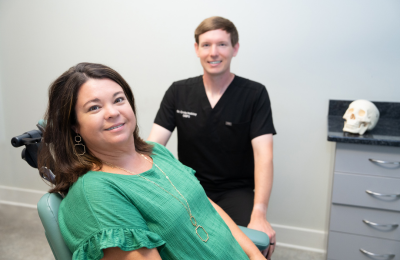
“Don’t be Afraid to Smile.”
For years, I’d felt like a part of my body was missing, because my teeth were. My dentist told me that dental implants would make me feel and look a lot better. OK, I said. Now, I’m thrilled. I can smile, eat anything, and enjoy a good laugh with my friends.